“Flower of Life Pilgrimage"
A Sound & Story Pilgrimage Through Egypt’s Living Temples
Celebrating the Sun festival at Abu Simble
February 2026
|
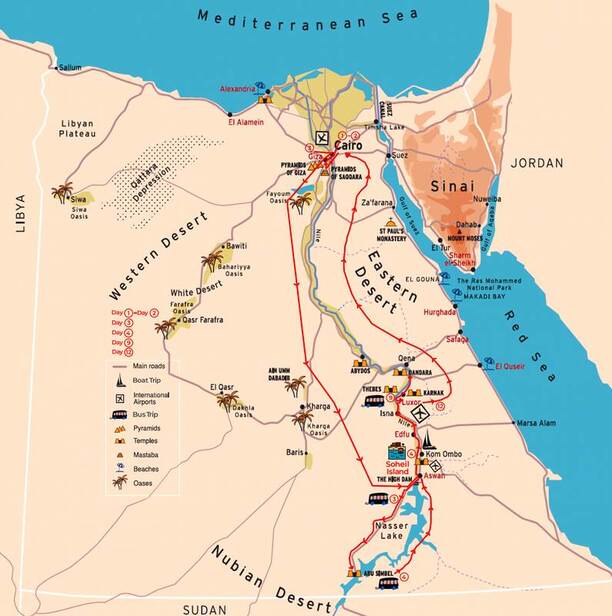
Join us on a journey of a lifetime in Egypt, a land of ancient history and profound spirituality. Our 14-day tour begins in Cairo, where we'll check in to the exquisite Pyramids Park Resort. We'll start our journey with an opening circle and dinner, followed by a visit the following morning to the Giza Plateau to observe the Sphinx. Next, we'll Fly to Luxor to visit the temples of Hathor and Osiris on Valentines Day. Followed by a deeper dive into the west bank sight's and temples, and authentic Egyptian baking immersion.
|
"waking up to the sounds of Egypt...something so breathtaking to behold..." We'll also visit the temple dedicated to Goddess Hathor, the Lady of the Stars, at Abu Simbel and enjoy the views of Lake Naser before sailing to Kom Ombo and visiting the healing temple dedicated to Horus the Falcon and Sobek the Crocodile.
|
"Sailing along the Nile, walking in the footsteps of History..." Join us for an unforgettable journey through the lands of Egypt. We'll end our pilgrimage back in Cairo, visiting the Egyptian Museum or the Khan Il Khalili marketplace and experiencing a sound meditation overlooking the Pyramids. Throughout our voyage, we'll gather in a sacred space for sound healing, immerse ourselves in the energy of Completion, and explore the stories in the stones and waters. These experiences will be engrained in your heart forever, and it's your moment of Sacred Completion. |
"You will leave refreshed and inspired..."
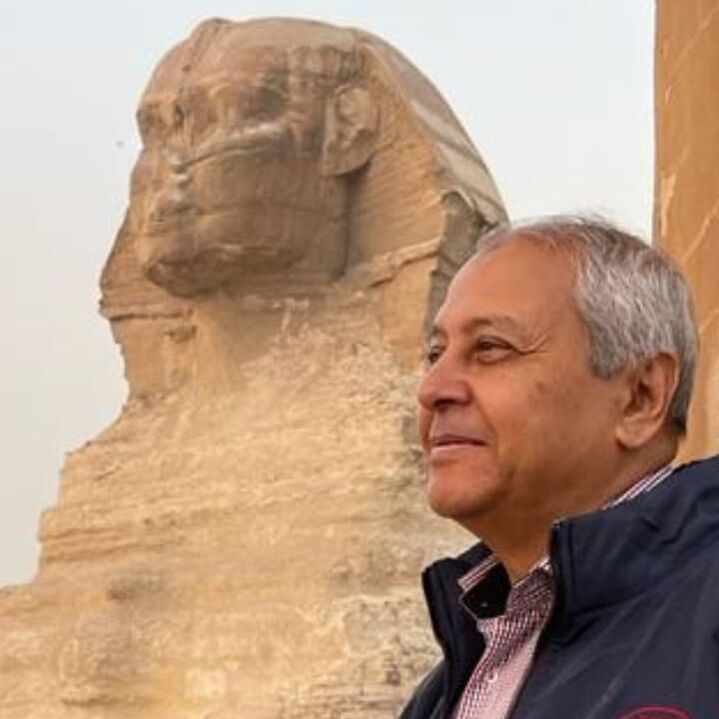
MAIN ATTRACTIONS sphinxThe Sphinx is one of Egypt's most famous and iconic landmarks and has fascinated people for centuries. The Sphinx is a massive structure, measuring over 240 feet in length and standing over 66 feet tall. It is made of limestone and has been carved out of a single piece of rock. The Sphinx is thought to have been built during the reign of Pharaoh Khafre in the 26th century BC and was intended to serve as a guardian of his pyramid. However, the exact purpose of the Sphinx is still a subject of debate among scholars and historians. The face of the Sphinx is believed to be that of Pharaoh Khafre, although this is still a matter of debate. The Sphinx's body is that of a lion, considered a symbol of strength and power in ancient Egypt. The Sphinx has been the subject of many legends and stories. One of the most famous is the story of Oedipus, who correctly answered the Sphinx's riddle and saved the city of Thebes. Another legend tells of Napoleon Bonaparte shooting off the Sphinx's nose during the French campaign in Egypt. Today, the Sphinx is one of the most popular tourist attractions in Egypt, attracting millions of visitors annually. It is a symbol of Egypt and its rich history and is an essential part of any trip to the country. Explore the mystery of the Sphinx, learn about its history and significance, and view it at sunrise for a breathtaking experience. |
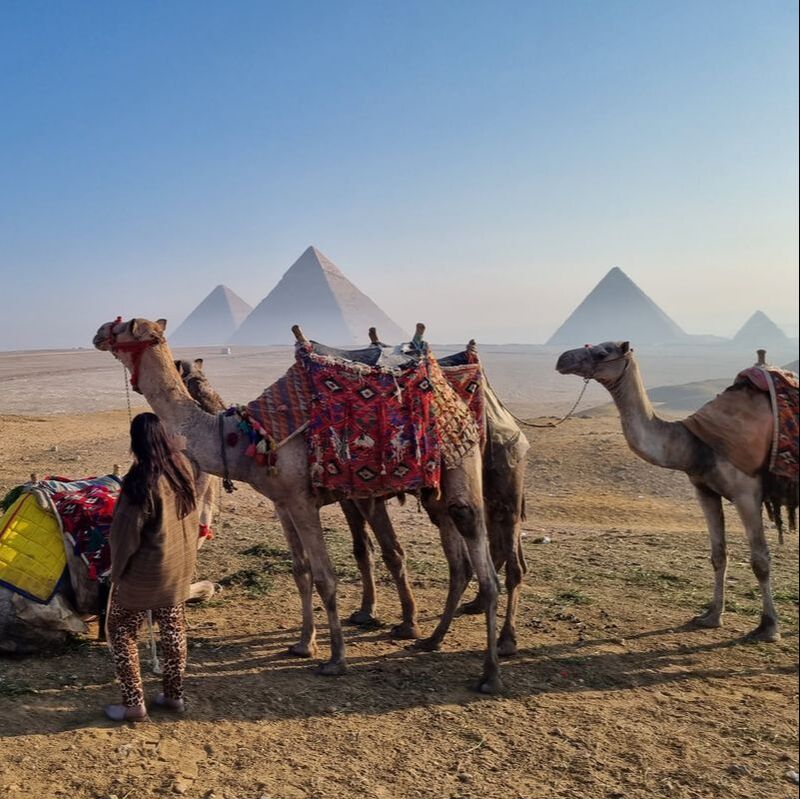
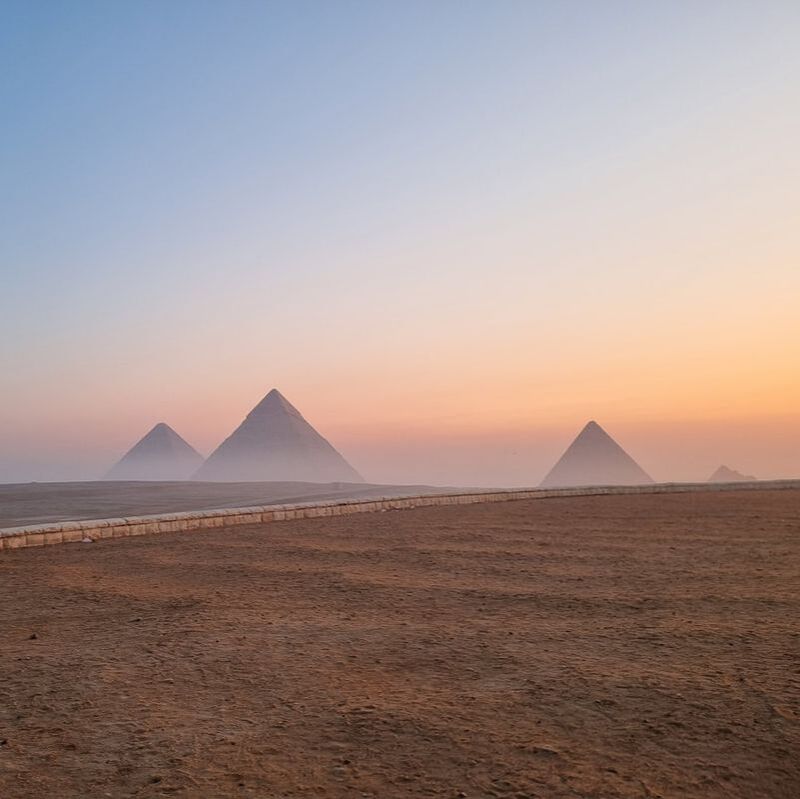
EXPLORE THE GIZA PLATEUThe Giza plateau, located on the western outskirts of Cairo, Egypt, is home to some of the world's most famous ancient monuments, including the Great Sphinx and the three towering pyramids of Giza: Khufu, Khafre, and Menkaure. Believed to have been constructed over 4,500 years ago during the Old Kingdom period of ancient Egypt, the pyramids served as grand tombs for pharaohs and their consorts, while the Sphinx, a massive limestone statue with the body of a lion and the head of a human, is thought to have been built as a protective symbol. The Giza plateau is one of the most popular tourist destinations in Egypt, drawing millions of visitors each year to marvel at the awe-inspiring architecture and learn about ancient Egypt's rich history and culture. |
BE THE INITIATE AT SAKKARASakkara, where initiates, royals, and priests gathered in a non-royal burial and cult ceremony complex. It dates back over 3,000 years, well into Ptolemaic and Roman times. Sakkara is an Egyptian village in the Giza Governance, situated 19mi south of modern-day Cairo, home to the oldest complete stone complex in human history, the famous Step pyramid of Djoser, built during the Third Dynasty. Another sixteen Egyptian kings built pyramids at Sakkara, which are in various states of preservation. |
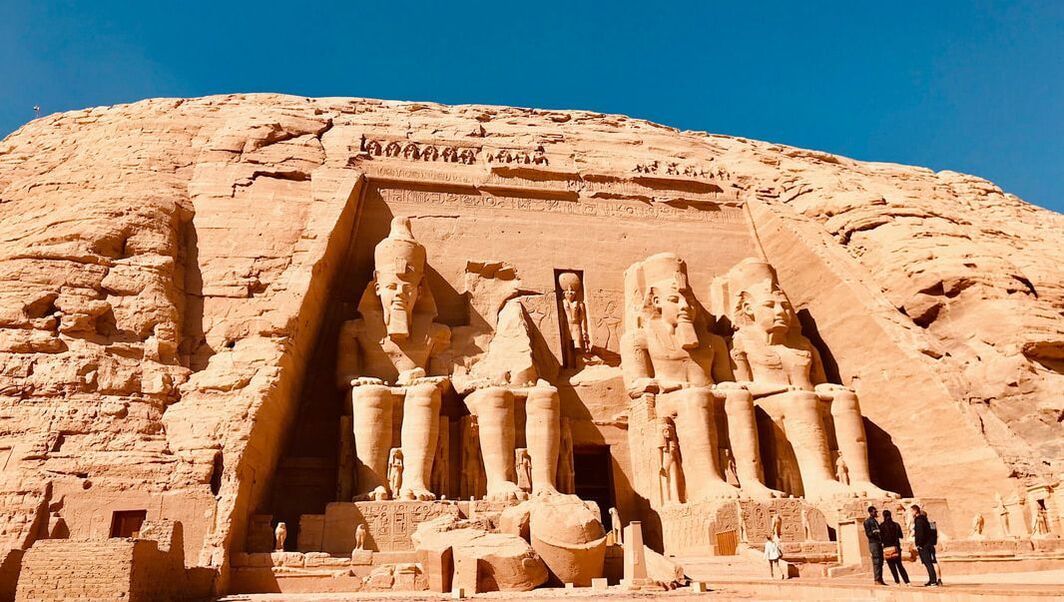
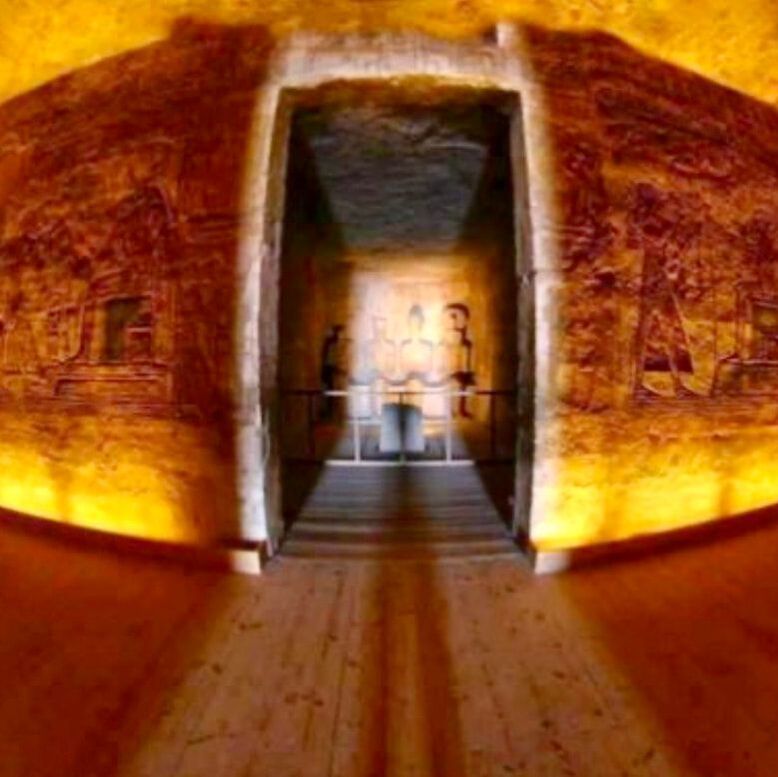
Sacred sun festival at abu simbel templeThe Abu Simbel temple is an ancient temple complex located in Nubia, Egypt, close to the southern border with Sudan. Built during the reign of Pharaoh Ramesses II in the 13th century BC, the temple is renowned for its impressive architecture and monumental sculptures. The temple complex consists of two temples, the Great Temple of Ramesses II and the smaller Temple of Hathor, as well as several other smaller buildings. The Great Temple is the most impressive of the two, with four colossal statues of Ramesses II sitting at the entrance, each measuring 20 meters in height. The temple's interior is equally stunning, with intricate carvings and hieroglyphics adorning the walls. One of the most unique features of the Abu Simbel temple is its orientation. The temple was explicitly built so that twice a year, on February 22 and October 22, the sun's rays would penetrate the inner sanctuary and illuminate the statue of the deity seated inside. This event, known as the "Sun Festival," draws large crowds of visitors worldwide. Overall, the Abu Simbel temple is a remarkable testament to ancient Egypt's architectural and artistic achievements and is a must-see destination for anyone interested in history, culture, and ancient civilizations. |
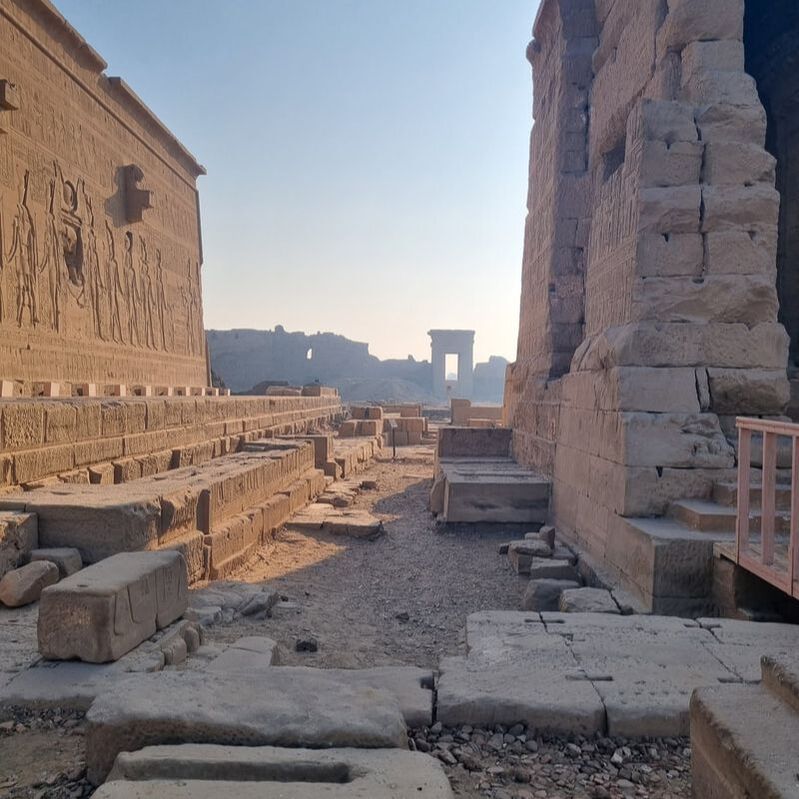
Philae temple complexThe Philae temple complex is island-based in the reservoir of the Aswan Low Dam, downstream of the Aswan Dam and Lake Nasser, Egypt. Until the International Campaign to Save the Monuments of Nubia, the temple complex located on Philae Island, near the expansive First Cataract of the Nile in Upper Egypt, these rapids and the surrounding area have flooded since the initial construction of the Aswan Low Dam in 1902. The temple complex was dismantled and moved to nearby Agilkia Island as part of the UNESCO Nubia Campaign project, protecting this and other complexes before the 1970 completion of the Aswan High Dam. The hieroglyphic reliefs of the temple complex are being studied and published by the Philae Temple Text Project of the Austrian Academy of Sciences, Vienna (Institute OREA). |
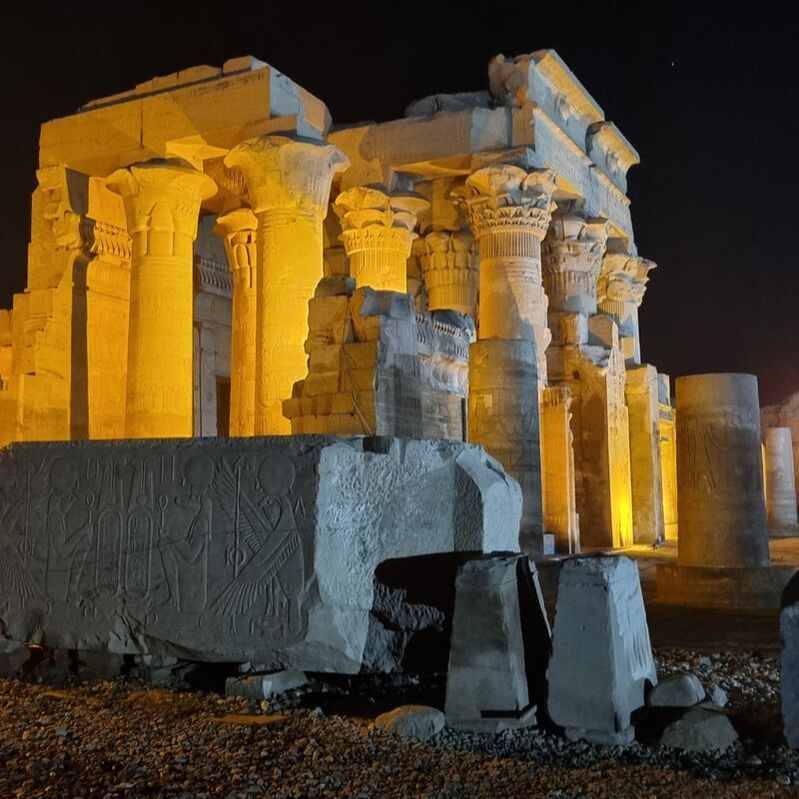
Kom ombo templeThe Kom Ombo Temple is a unique and fascinating archaeological site in Kom Ombo, Egypt. This ancient temple is dedicated to two gods, Sobek, the crocodile-headed god, and Horus, the falcon-headed god. The temple is famous for its well-preserved reliefs and engravings that depict scenes of daily life in ancient Egypt and myths and legends associated with the gods Sobek and Horus. Visitors can admire the intricate carvings, explore the temple's chambers and halls, and learn about the history and significance of the site from knowledgeable guides. One of the most exciting features of the Kom Ombo Temple is its double design, with symmetrical sections dedicated to each of the two gods. This unique layout reflects the importance of Sobek and Horus in the local religious beliefs and practices. |
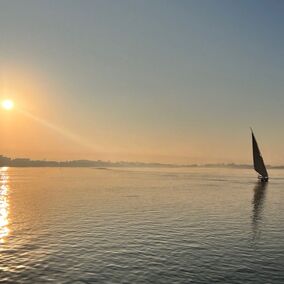
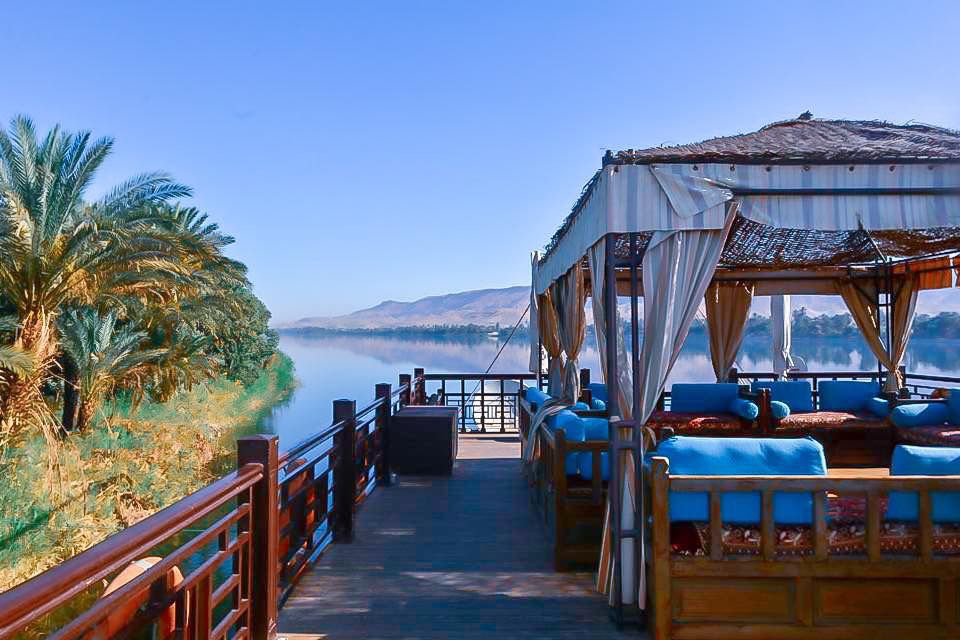
sailing on the nileSailing on the Nile on the Kaian Dahabiya is an unforgettable experience that immerses you in the beauty and history of Egypt. This traditional sailing vessel is a luxurious and comfortable way to explore the Nile, with spacious cabins and elegant dining and lounging areas. As you journey along the Nile, you'll marvel at the stunning landscapes, from lush greenery to desert dunes, and pass by iconic landmarks such as the Valley of the Kings and the Temple of Luxor. Expert guides will share their knowledge and insights into the region's rich history, providing a fascinating glimpse into the ancient world. In addition to sightseeing, there are plenty of opportunities to relax and unwind on board the Kaian Dahabiya. Enjoy delicious meals prepared by talented chefs, sip cocktails on the sun deck, or sit back and enjoy the breathtaking scenery. Whether you're a seasoned traveler or a first-time visitor to Egypt, sailing on the Nile on the Kaian Dahabiya is an experience that will stay with you for a lifetime. |
karnakIt is filled with many mysteries and activations. You will meet Sekhmet, "the Lion Goddess," in her Chappel and explore the moon temple of Khonsu. The ancient Egyptians' "Most Selected of Places" and the principal place of worship of the 18th Dynasty, Theban Triad, with the god Amun as its head. The Karnak complex is named after the modern village of El-Karnak, 1.6 mi north of Luxor, Egypt. Construction began during the reign of Senusret I in the Middle Kingdom and continued in the Ptolemaic Kingdom. |
dendaraMay you sing with joy as your soul rejoices during a full moon visit to Hathor's temple at night. Dendara Temple becomes alive at night as the lighting highlights the majestic structures for an exquisite experience. Approximately 37mi north of Luxor lies the Dendera Temple complex. The Dendara Temple remains one of the best-preserved temple sites from ancient Upper Egypt. Hathor, the lady of the Sky's temple, is protected by 40,000 square meters of hefty mud brick walls. You will feel like you are welcomed into the womb of the "Mother." |
HATSHEPSUT TEMPLeHatshepsut's legacy, though frequently debated, dominated regarding the extent of whether her reign challenged or upheld the patriarchy. On the one hand, Hatshepsut was an innovator. She managed to rule as regent for a son who was not her own, defying the system which had previously only allowed direct mothers to rule on behalf of their biological sons. She used this regency to manufacture her female kingship. She constructed extensive temples to celebrate her reign, forcing the public to grow accustomed to seeing a woman in such an influential role and ensuring that the Egyptian public readily accepted her status when the oracle declared her king. She did so while feigning a lack of ambition and cunning, thus ensuring that she would not alienate potential supporters. |
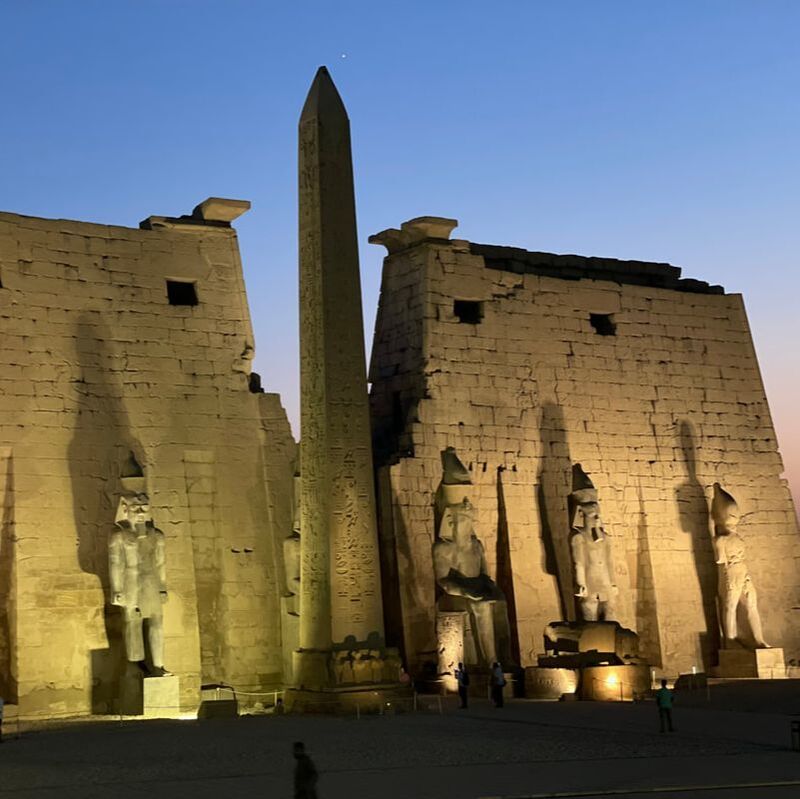
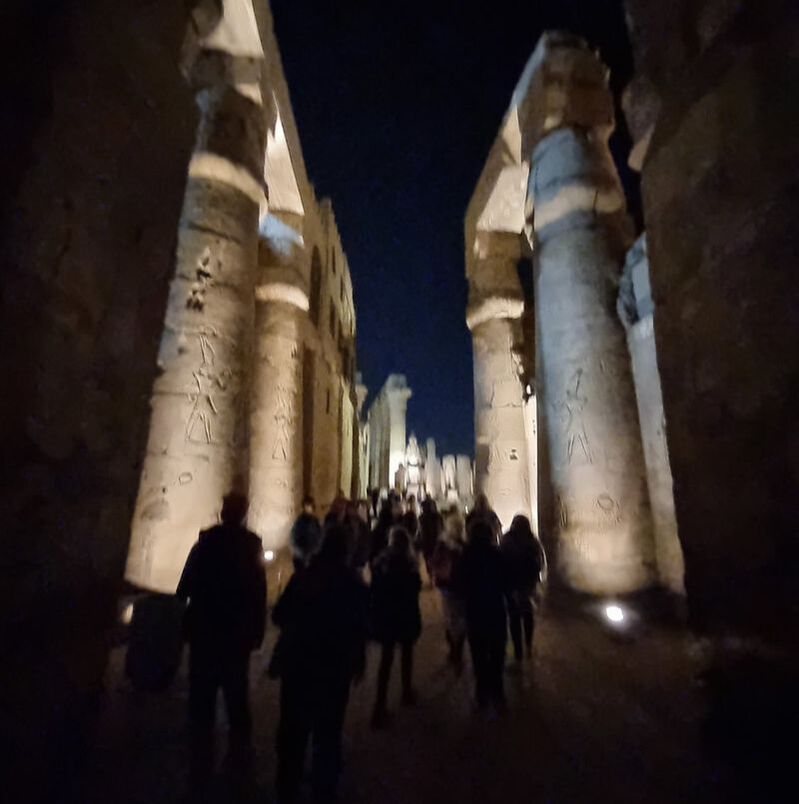
luxor templeLuxor Temple is an ancient temple complex located in Luxor, Egypt. It was built approximately 3,400 years ago, during the reign of Amenhotep III, and was later expanded and modified by many other pharaohs over several centuries. The temple was dedicated to the god Amun, who was considered the king of the gods during the New Kingdom period in ancient Egypt. The temple complex consists of several large courtyards, halls, and shrines, including the famous Colonnade Hall, lined with towering columns and decorated with intricate carvings and paintings. One of the temple's most striking features is the Avenue of Sphinxes, which stretches for almost two miles from the temple to the Luxor Museum. This grand processional pathway was lined with statues of sphinxes, which had human heads and the bodies of lions, and was used during important religious festivals and ceremonies. |
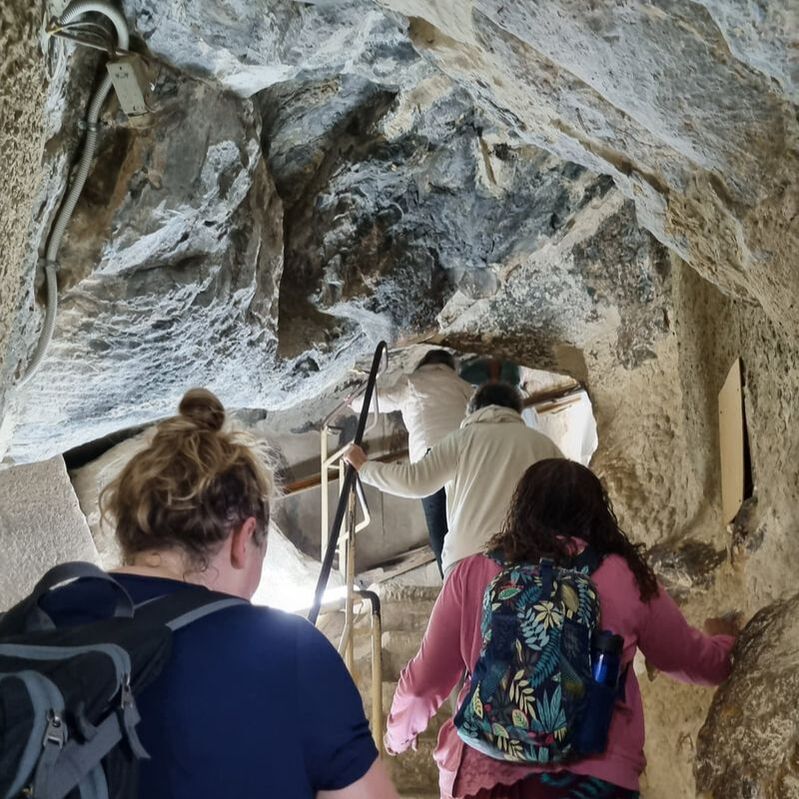
ASCEND THE GREAT PYRAMIDPRIVATE VISITAscend and assimilate the magnitude of one of the Seven Wonders of the Ancient World during a private visit to bring our healing journey to a close. Pyramid of Khufu is also known as the "Great Pyramid" and the "Pyramid of Cheops," the smaller Pyramid of Khafre or "Chephren" is relatively modest-sizes, and lastly, the Pyramid of Menkaure or "Mykerinus," as well smaller satellite edifices known as "Queen's pyramids. Off the three Pyramids, only the Khafre's pyramid retains part of the original polished limestone casing near its apex. |
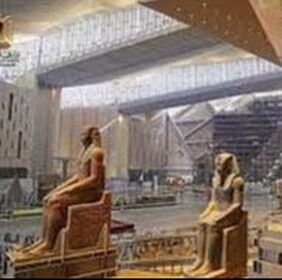
grand egyptian MuseumThe GEM will be open during our tour. We will be popping in for a few hours. You probably need a whole week to experience the splendor. The Grand Egyptian Museum is the most significant archaeological museum complex in the world. They are hosting more than 100,000 artifacts. King Tutt's entire treasure collection is on display for the first time in history. The Grand Museum will take you back to pre-historic times through Egypt's many thousands of years of pharaonic civilization through the modern Greek and Roman periods. Discover the rich history of Egypt. |
|
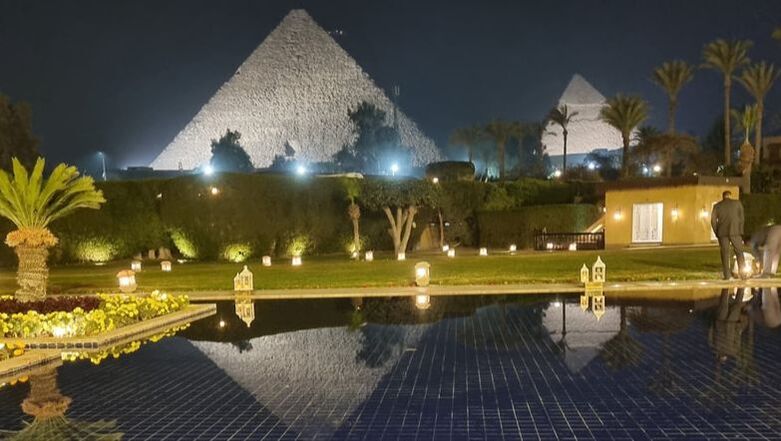
Your sacred journey begins as you arrive in Cairo and settle into the tranquil embrace of the Pyramids Park Resort. As the evening descends, we gather for an intimate opening dinner overlooking the grand pyramids. A powerful circle of welcome. Together we ground our intentions, and open our hearts for the Flower of the Nile Pilgrimage ahead. This first night is an arrival into timelessness, a gentle crossing from the ordinary into the extraordinary.
|
|
Before dawn paints the horizon, we enter the Giza Plateau in silence for a private ceremony between the paws of the Sphinx, Earth's Altar. This ancient sentinel and neteru receives us in quiet grandeur, transmitting its millennia-old wisdom into our bones and psyche. We linger, breathing with the stones, listening to the desert winds and our hearts for our truest intent for this journey.
|
|
Today we fly to Luxor, the beating heart of Upper Egypt, and settle into the serene Steigenberger Resort Achti on the Nile. Our journey unfolds with a visit to the Temple of Dendera, where Hathor’s columns rise like living sound frequencies. The walls here pulse with fertility, music, and joy, inviting us to remember our own divine radiance. We continue on to Abydos for a private visit to the Osirion, the subterranean chamber linked to resurrection and eternal life. Surrounded by still water and massive limestone, you may feel the vibration of Osiris stirring the memory of your own soul’s renewal.
|
|
We spend the day exploring Luxor’s sacred land, its temples, markets, and the slow-flowing majesty of the Nile. Here we practice stillness and integration, weaving the codes of the previous days into our bodies. Those who feel called may swim in the Nile, an immersion into one of Earth’s oldest arteries, letting its current wash away what no longer serves. After dusk we gather at Luxor Temple, its illuminated columns shimmering with the echoes of processions long past, to receive its night teachings under a canopy of stars.
|
|
At first light we travel to the temple of Hatshepsut, carved directly into the cliffs, embodying the vision and power of Egypt’s most remarkable female pharaoh. Standing here you can feel the architecture itself lifting your spine, summoning the dignity of sovereign leadership. We then cross to the West Bank to learn and create alongside local cooks and artisans. A traditional cooking experience and a visit to an artisan’s tomb become living classrooms where food, craft, and spirit intertwine. This day nourishes not only the senses but also the soul’s longing for connection with everyday Egyptian life.
|
|
We board the Flower of Life Dahabeya, a handcrafted sailboat whose very name evokes the sacred geometry we carry within. The sails rise, the ropes sing, and we drift upon the Nile as countless pilgrims have done before. In Esna we visit the temple of Khnum, guardian of the cosmic waters and potter of human form. Here you may feel yourself remade from clay and light, your inner architecture aligned with creation’s pattern.
|
|
As the dawn sun gilds the water, we sail to Edfu, home of the great Horus Temple. Within its colossal walls the falcon god’s presence still lingers. Walking these corridors, you may sense wings unfurling behind your shoulders, the call to right action, clarity, and awakened sight echoing through every stone.
|
|
This is a day of drifting and deep listening. As the boat glides, we are invited to surrender to the Nile’s timeless embrace. Some will journal, meditate, or offer spontaneous sound healings; others may simply watch the villages and palms slip by. We carry gifts for children and bread for villagers, small acts of reciprocity to honor the land that holds us. This unhurried day becomes an inner temple, a spaciousness in which integration ripens.
|
|
At sunrise we step ashore to explore Kom Ombo, the only temple dedicated to two gods, Horus the Falcon and Sobek the Crocodile, guardians of vision and primal power. Their dual presence invites us to honor our own paradoxes and bring them into harmony. By evening we arrive in Aswan, a city of golden light and ancient granite quarries, where we prepare for the next phase of our pilgrimage.
|
|
Before dawn we make our way by boat to Philae, the beloved temple of Isis. Here, in the quiet before tourists arrive, we enter the sanctuary for a private ceremony. Known in antiquity as a place of healing and advanced learning, Philae transmits the Divine Feminine’s enduring grace and the memory of sacred medicine. Afterward we journey south across the desert to Abu Simbel, checking into the Azal Lagoons Resort Abu Simbel, our base for the days surrounding the Sun Festival.
|
|
This day is devoted to the Sun Festival, when the morning rays pierce the inner sanctuary of Abu Simbel and illuminate the seated statues of the gods. It is a living hierophany, a cosmic clock reminding us of our alignment with celestial rhythms. You may choose to witness the spectacle directly or to rest and integrate nearby, letting the energies of the festival pulse through your field like solar tides.
|
|
A full day at Saqqara invites you deeper into the oldest layers of Egyptian ritual architecture. We pause at a secluded campsite introduced by our local guide, sharing stories, music, and a simple lunch under the desert sky. The vastness of Saqqara opens a corridor between earth and star, past and future, inviting you to remember why you came.
|
|
At sunrise we return to the Giza Plateau, stepping again into the King’s or Queen’s Chambers to seal the work we’ve done. Later we ride camels across the plateau, absorbing the final impressions of sand, sky, and stone. As the sun sets, we gather at Kheop’s House for a closing dinner and ceremony, a time of reflection, gratitude, and transmission, weaving together the many strands of this pilgrimage into a single golden thread.
|
WHAT IS INCLUDED?✔ A Welcome Package that includes optimal health information for our time in Egypt
✔ Pre and Post Pilgrimage group call. ✔ Meet and assist at the airport ✔Transportation and transfers to and from the airport. ✔All Domestic Transport ✔ Domestic return flight between Cairo and Upper Egypt (Luxor). ✔ 4 to 5 Star Accommodation. ✔ 1 night at Pyramids Park Resort ✔ 4 nights at Steigenberger Resort Achti ✔ 4 nights on the Flower of life Dahabeya ✔ 2 nights at Azal Lagoons Resort Abu Simbel ✔ 3 nights at Kheop's HouseCrystal Pyramid Inn ✔ Welcome & Farewell dinner ✔ All Meals: Mouth-watering Middle-eastern Food (except two dinners) ✔ All entrance fees to temples and tombs. ✔ Some tips (excluding tipping our transportation, hotel, security crew & extras). ✔ Private visits to the Sphinx, Abu Simbel and Great Pyramids ✔ Spiritual Guidance, Sound Healing, Teachings and Detoxification Support ✔ Our enthusiastic and mystical Egyptologist and Tour guide. Take note: ✔ Single Room options available upon request ✔ We will be visiting all the sites listed, as well as some additional surprise locations to reward you with a local Egyptian experience. However, in order to honour the exclusive experience we are offering you, the times and days might shift to ensure optimal flow |
WHAT IS EXCLUDED
✘ International Flights to and from Egypt.
✘ Entry Visa to Egypt: which is currently $25 for USA and European citizens, please see visa regulation here. ✘ Travel and Health Insurance (encouraged to help protect you in case of any Travel Incidents, Illness or Emergencies). ✘ Discounted Program by Dr. Kathia PhD of Egypt's Healing Mysteries for an introduction to the Temples and Mythology prior to our Journey. ✘ $550 additional tips in cash (For Egyptologist & Tour guide) ✘ Healing & Health Products, group discounted programs available "SACRED SOUND AND STORY ALONG THE NILE" IMAGINED |
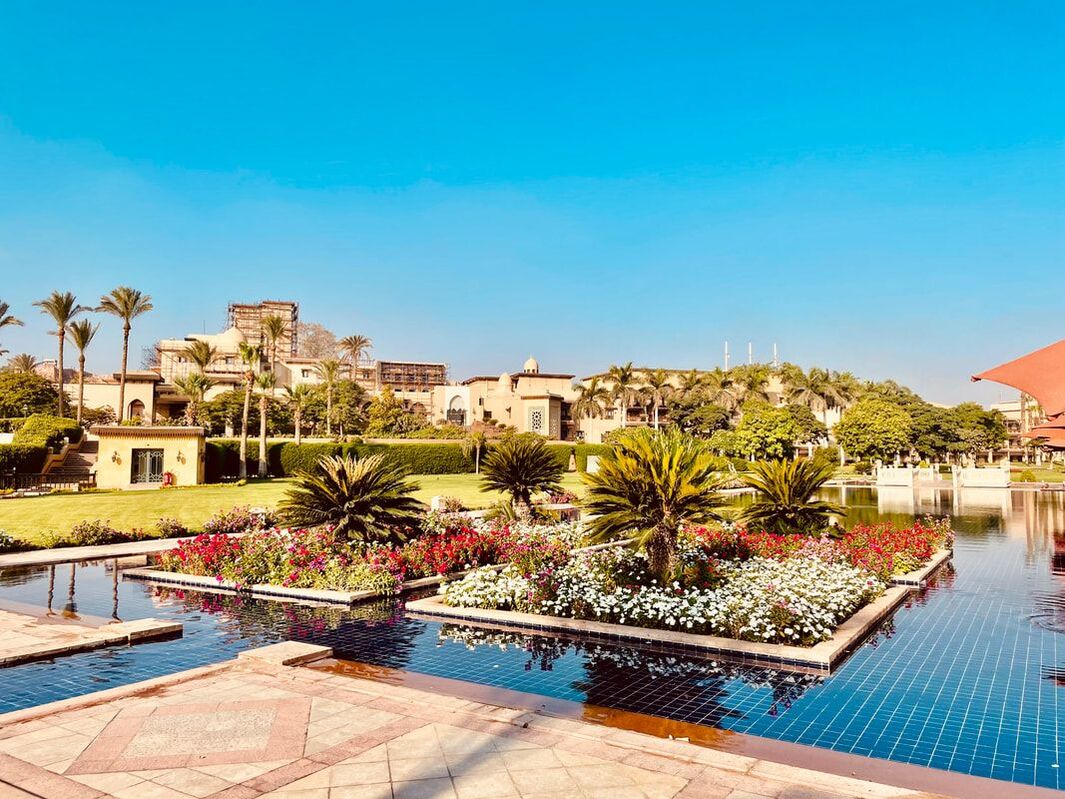
Pyramids park resortThe Pyramids Park Resort in Cairo is a stunning hotel overlooking the Great Pyramids of Giza, surrounded by lush gardens. The hotel offers luxurious amenities such as a spa, fitness center, pool, and rooms adorned with handcrafted furniture.
All rooms at the Marriott Mena House, Cairo, have air conditioning, plush fabrics, a seating area, and an LCD TV. Each room and suite includes a spacious private bathroom with a bathrobe and slippers for added comfort. |
Embark on a Luxurious Journey Through Time aboard Kaian Dahabia.
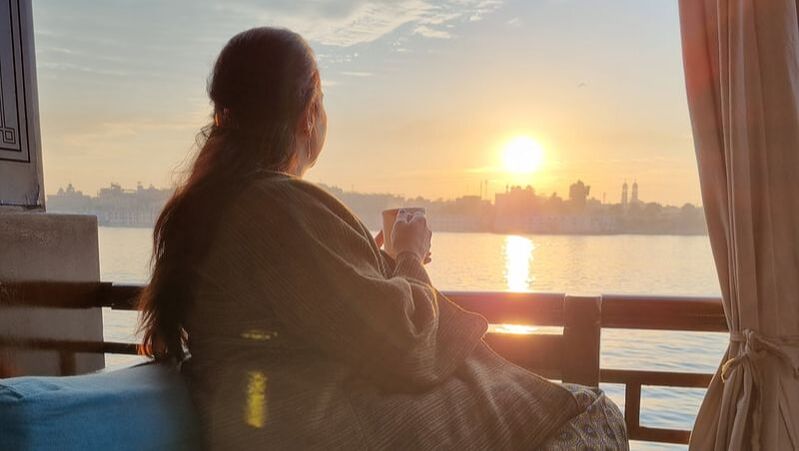
Set sail on a cruise that combines luxury, culture, and history into an unforgettable experience. The Kaian Dahabia is more than just a Nile cruise; it is a unique, customized voyage into Egypt's heart, where every moment is a connection to the ancient world and every comfort is at your fingertips. Your luxurious cabin, a private haven decorated with handcrafted furnishings and expansive floor-to-ceiling windows, offers breathtaking views of the Nile—creating an atmosphere of unparalleled comfort as you glide down this historic waterway.
|
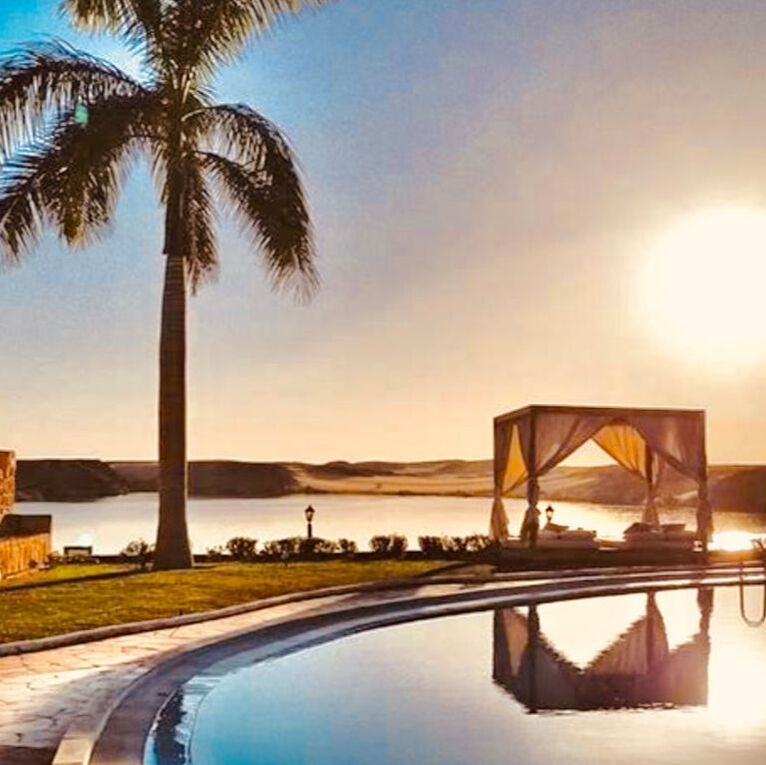
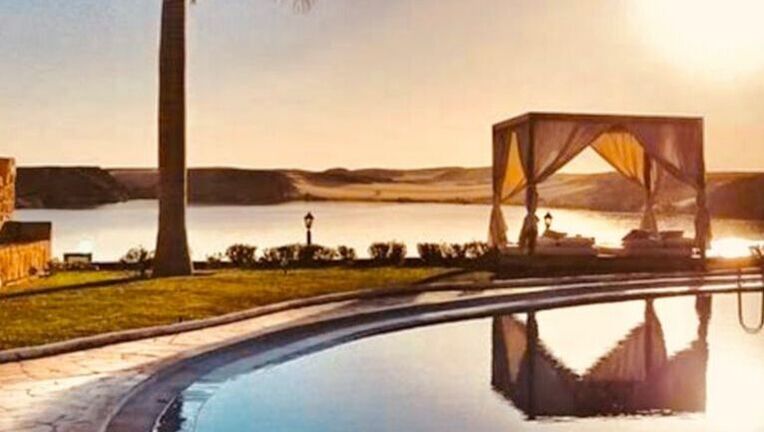
azal lagoons resort abu simbelThe Azal Lagoons Resort in Abu Simbel is a five-star sanctuary on the shores of Lake Nasser, just minutes from the temples of Ramses II.
Spacious rooms and suites blend Nubian design with modern comfort, each offering serene lagoon or garden views. Guests can unwind by the infinity pool, rejuvenate in the spa, or stroll the private shoreline at sunrise. With refined dining that highlights Egyptian and international flavors, Azal Lagoons offers an elegant, tranquil base for exploring Abu Simbel’s sacred landscape. |
DR. KATHIA PHD, ND, D.PHYT, CERT TCM, NIM
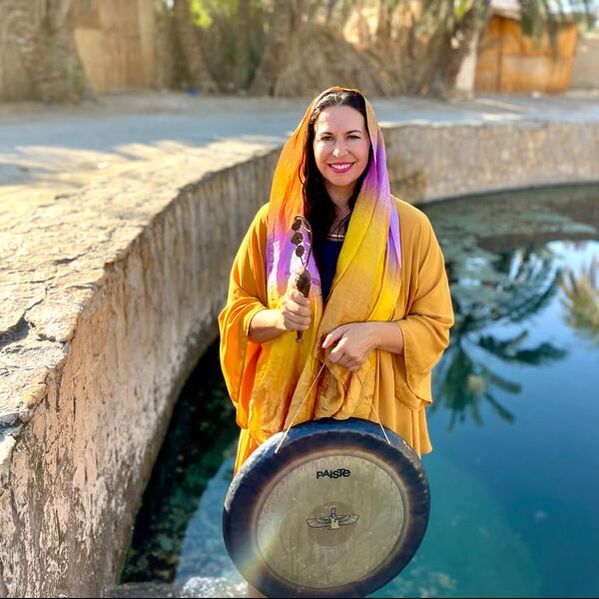
I am answering my calling as a Neteru Medicine Woman, Healer, Scientist, Researcher, and Priestess, in leading groups to Egypt. I serve as a conduit, gatekeeper, and guide for the mysteries to be remembered and integrated. My deep connection, shamanic mentorships, sojourns, and remembrances of Egypt led me on an in-depth path of initiation into the mysteries of the Egyptian Pantheon.
For the past 22 years, I have practiced the healing arts as a Naturopathic Doctor, Medical Herbalist, Sound Healer, and Aromatherapist and regularly present as a Keynote Speaker on "psychoacoustics" in the medical community and internationally. Additionally, I have led workshops and explorations of Egyptian Mysteries for the past six years, along with my year-long mentorship program in Egyptian Shamanism. It brings me so much joy and fulfillment to facilitate a Sound Journey Through Ancient Egypt, where each temple was built with a specific healing frequency in mind that comes alive through our sacred intentions, and visiting these healing sites allows for the physical embodiment. |
TEACHINGS & FACILITATION:
|
FALL IN LOVE WITH YOURSELF AND THE PEOPLE OF EGYPtEgyptian culture is deeply rooted in the country's ancient past, with many traditions and customs that date back thousands of years. From the pyramids and temples of the pharaohs to the ancient tombs and burial rites that still hold deep significance for many Egyptians, the country's history is a constant presence in everyday life. At the same time, Egypt is a modern and rapidly changing society with a thriving arts and culture scene that embraces both traditional and contemporary influences. Music and dance are integral to Egyptian culture, with a wide range of styles and genres that reflect the country's diverse heritage and influences. Despite the challenges and struggles that Egypt has faced in recent years, the spirit of the Egyptian people remains strong and resilient, as evidenced by how they come together in times of crisis and hardship. Overall, the experience of Egyptian culture is one of depth, richness, and diversity, with something to offer everyone. From the ancient wonders of the past to the vibrant and dynamic culture of the present, Egypt is a country steeped in tradition yet constantly evolving and changing with the times. |
DEVOUR HEALTHY EGYPTIAN CUISINeEating Egyptian food is a rich and satisfying experience that can transport your taste buds to another world. The bold flavors and fragrant spices used in Egyptian cuisine create a complex and unique taste profile that is delicious and distinctive. From the comforting and filling koshari to the hearty and flavorful ful medames, every dish has a distinct taste and texture that showcases the diversity of ingredients used in Egyptian cooking. The use of beans, grains, vegetables, and meats all come together to create a range of comforting and adventurous dishes. The experience of eating Egyptian food is not just about the flavors but also about the communal aspect of the cuisine. Many traditional Egyptian dishes are designed to be shared, and breaking bread and sharing a meal with friends and family is a central part of the food culture. Overall, the experience of eating Egyptian food is a sensory delight, from the bold aromas of the spices to the satisfying textures of the dishes themselves. It's a cuisine that embodies the rich and diverse history of Egypt and is a must-try for anyone looking to explore the world of international cuisine. |
Work With Me |
Pilgrimages & Retreats |